
Accident and pain care · St. Louis
Accident, injury and pain care — without the runaround
If you were hurt in a crash, a fall or at work, you should not have to wait weeks to be believed. We see accident and injury patients quickly, image what needs imaging, and treat the cause rather than masking it.
Medicaid, Medicare, commercial plans, auto med-pay and workers’ compensation accepted. No referral needed to book.
Gateway Midwest Healthcare
12174 Natural Bridge Rd, Suite 110
St. Louis, MO 63044
Call or text us for an urgent appointment.
Hours
Monday–Friday, 8:00 a.m. – 4:00 p.m.
Closed Saturday and Sunday
Free surface parking. The entrance is step-free, and the treatment rooms are on one level.


How we can help
Accident & injury care
Seen quickly after a car crash, a fall or an injury at work — including the symptoms that only show up two days later.
Conditions we treat
Back and neck pain, sciatica, whiplash, headaches, joint pain, nerve pain and complex regional pain.
Treatments & procedures
Image-guided injections, nerve blocks, radiofrequency ablation, EMG/nerve testing and physical therapy.
Understanding your MRI report
Plain-English explanations of the words on your scan — annular tear, foraminal narrowing, facet arthropathy.
Insurance & Medicaid
We accept Medicaid, Medicare and most commercial plans, plus auto med-pay and workers’ compensation.
Opioid stewardship
How we reduce opioid doses safely while treating the cause of the pain.
Steroid shots stopped lasting? We also offer PRP injections and other orthobiologics for worn joints, sore tendons and the low back.
Why does my neck hurt days after a crash when the X-ray was normal?
Most of our accident patients have already been somewhere else. They went to an emergency room, got an X-ray, were told nothing was broken, and were sent home with a sheet of paper. Two days later their neck seized up. A week later they could not turn their head to reverse the car.
That sequence is normal, and it is not in your head. An X-ray rules out a fracture; it says nothing about the discs, the facet joints, the nerve roots or the soft tissue that actually cause post-collision pain. What we do is look at the structures an X-ray cannot see, treat them directly, and document the whole thing properly from day one.
Our position on opioids
We are not an opioid clinic. We are a clinic that gets people off opioids.
If you are looking for a practice that will simply continue or increase an opioid prescription, we are not the right fit, and we would rather say so now than waste your appointment. What we do instead is find out why the pain is there and treat that.
Most patients arrive already on an opioid — that is the reality of chronic pain in this country, and it is not a moral failing. Our job is to reduce the dose safely while the pain is brought under control by other means: image-guided injections, nerve blocks, physical therapy, sleep, and the metabolic drivers that keep pain switched on. Tapering is done with you, on a timeline your body can tolerate. Nobody is discharged for being on opioids when they arrive, and nobody is abandoned mid-taper.
We also will not pretend the alternative is effortless. Coming down off a long-standing dose is hard, it takes months rather than weeks, and there are stretches where it feels worse before it feels better. We tell patients that at the first visit rather than the fourth.
Read our full opioid stewardship policy, including how we handle tapering, prescription monitoring and patients transferring from another practice.
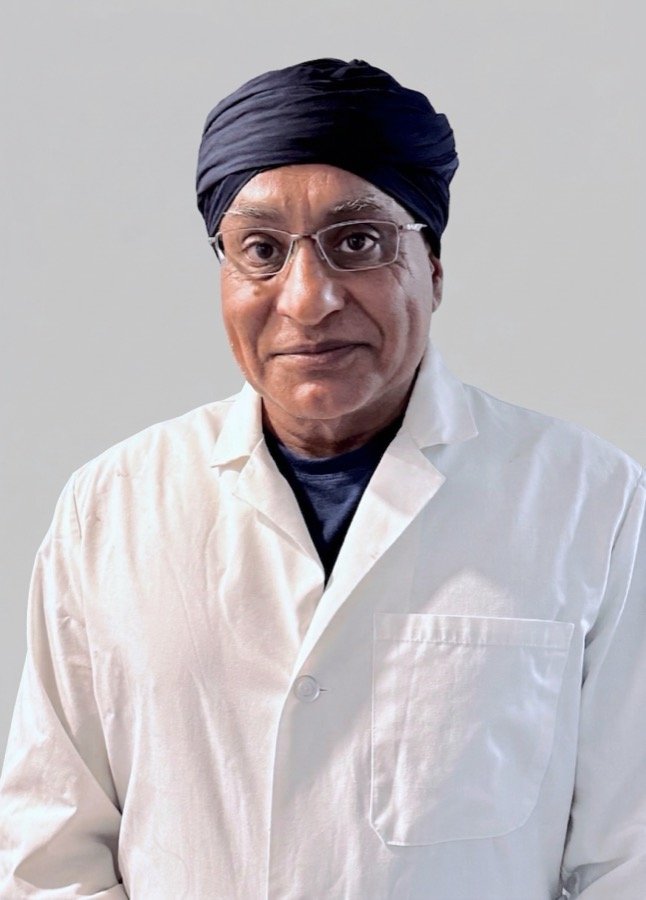
Dr. Gurpreet Singh Padda, MD, MBA, MHP
Interventional pain physician and anesthesiologist. He has practiced in St. Louis for more than two decades.
Dr. Padda trained in anesthesiology and interventional pain medicine and has spent his career on the part of pain that most practices skip: why it started, why it persists, and what is feeding it. That is why patients here are asked about sleep, blood sugar and inflammation as well as about the injury — in a large share of chronic pain, the metabolic picture is doing real work, and treating only the site of pain leaves that untouched.
He treats patients in both Missouri and Illinois and sees accident and injury patients at the Natural Bridge Road office.
Common questions
Do I need a referral?
No. You can book directly with us. If your insurance plan requires a referral we will tell you when you call, and we can help you get one — see insurance and Medicaid.
Do you accept Medicaid?
Yes. We accept Missouri Medicaid (MO HealthNet) along with Medicare and most commercial plans. Details are on our insurance page.
I was in a car accident but I feel mostly fine. Should I still come in?
Usually yes. Whiplash and soft-tissue injuries often take 24 to 72 hours to declare themselves, and an early record of your symptoms matters both clinically and for any claim. See what to do after a car accident.
Will I be given opioids?
Our aim is the opposite — treating the source of the pain so that opioid doses can come down. Read our opioid stewardship policy for how we handle patients already on a prescription.
What should I bring to my first visit?
A photo ID, your insurance card, a list of your medications, and any imaging or records you already have. The full list is on new patients.
Where are you and is there parking?
12174 Natural Bridge Rd, Suite 110, St. Louis, MO 63044, with free surface parking and step-free access. Directions and map.
More questions about pain care in St. Louis
What does a pain management clinic treat?
Here that means back and neck pain, sciatica, whiplash, headaches, joint pain, nerve pain and complex regional pain, along with injuries from car crashes, falls and work. We see accident and injury patients quickly, image what needs imaging, and treat the cause of the pain rather than masking it.
What treatments does a pain management doctor use?
Image-guided injections, nerve blocks, radiofrequency ablation, EMG and nerve testing, and physical therapy, chosen by what is causing the pain. Sleep, blood sugar and inflammation are part of the picture too, because in a large share of chronic pain the metabolic side keeps pain switched on. Opioid doses come down as the pain comes under control.
Can I get a same-day appointment?
Often, yes, for new accident and injury patients. Call (314) 310-5577 or text (314) 886-5902 during clinic hours, Monday through Friday from 8:00 a.m. to 4:00 p.m. You do not need a lawyer, a police report or a referral to be seen. Bring your symptoms and we will work out the rest.
Do you see patients from Illinois?
Yes. Dr. Padda treats patients in both Missouri and Illinois, and he sees accident and injury patients at the Natural Bridge Road office in St. Louis. You can book directly, with no referral needed, by calling (314) 310-5577 or using the Schedule Now button at the top of this page.
Hurt in an accident? Start here.
You do not need a lawyer, a police report or a referral to be seen. Bring your symptoms and we will work out the rest.
Monday–Friday, 8:00 a.m. – 4:00 p.m. Same-day appointments are often available for new accident and injury patients.