
An EMG and nerve conduction study is electrical testing. It shows whether a nerve is truly damaged, which nerve it is, and how badly.
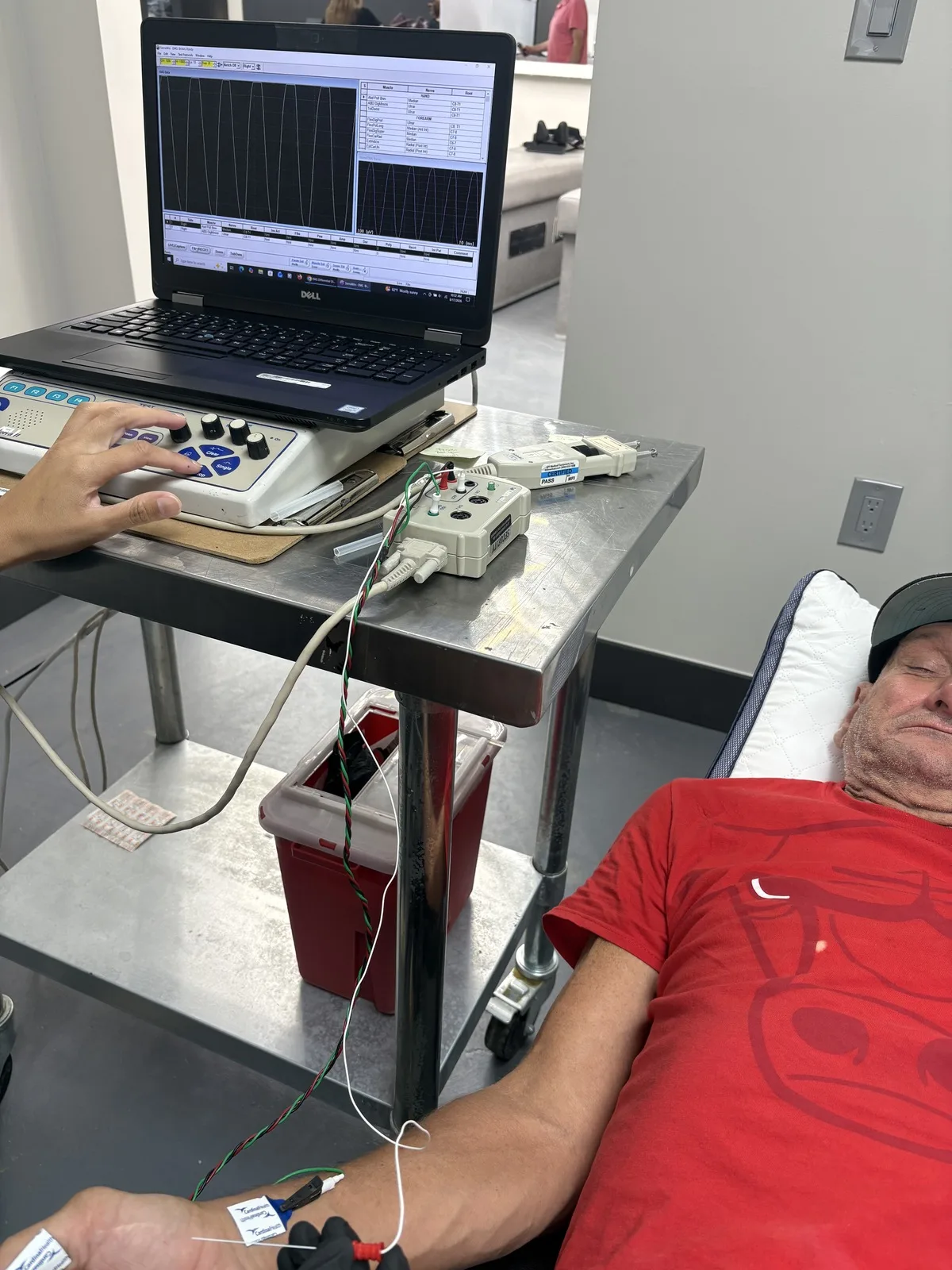
What is an EMG and nerve conduction study?
An MRI shows anatomy. It cannot tell you whether a nerve is really working. EMG and nerve conduction studies measure function directly. That is why they answer questions imaging cannot, such as whether arm symptoms come from the neck or the wrist.
What can an EMG and nerve conduction study show?
- Separating cervical radiculopathy from carpal tunnel syndrome
- Confirming and grading peripheral neuropathy
- Recording measurable nerve injury after an accident or work injury
- Deciding whether weakness is neurological or comes from pain holding the muscle back
What happens during an EMG test?
- Two parts: small electrical pulses along the nerve, then a fine needle electrode in chosen muscles.
- The pulses feel like a static shock. The needle part is uncomfortable but brief.
- Allow about 45 minutes. No sedation, and you can drive yourself.
- Do not use lotion on the skin that morning, and tell us if you take a blood thinner or have a pacemaker.
Are there any risks to an EMG test?
This is a test, not a treatment, and its risks are small. The needle part causes brief discomfort and sometimes a small bruise. Tell us ahead of time if you take anticoagulants (blood thinners), if you have a pacemaker or implanted defibrillator, or if you have lymphedema (fluid buildup) in a limb. Each one changes how or whether parts of the study are done. Do not put lotion or cream on the skin that morning. That is because it gets in the way of the surface electrodes.
To talk about whether this is right for you, call us or request an appointment.
What do EMG results tell you?
Its value is that it measures function, not looks. Imaging can show a squeezed nerve that works perfectly. It can also look normal next to a nerve that does not work.
It also grades how bad the damage is, which changes decisions. Mild squeezing with normal muscle signals is a conservative problem (one for non-surgical care). Clear axonal loss (loss of the nerve’s wiring) with muscle wasting is a surgical referral. No other test shows that difference.
Before and after your procedure
No sedation, so you can drive yourself. Do not put lotion, cream or oil on the skin that morning. Wear loose clothing so we can reach the arms and legs. Tell us ahead of time about blood thinners, a pacemaker or defibrillator, or lymphedema. Allow about forty-five minutes. There are no restrictions afterward.
Common questions
Is it painful?
Uncomfortable, not painful, and short. Most people find the waiting worse than the test.
Why can’t an MRI answer this?
Imaging shows structure. Many people have nerve squeezing on a scan with no nerve damage. Some have nerve damage with a normal-looking scan.
The mechanism is covered in Carpal Tunnel Syndrome.
What should you not do before an EMG test?
Do not put lotion, cream or oil on your skin that morning, because it gets in the way of the surface electrodes. Tell us ahead of time if you take a blood thinner, have a pacemaker or implanted defibrillator, or have lymphedema in a limb. That is because each one changes how or whether parts of the study are done. Wear loose clothing that lets us reach your arms and legs.
How long does an EMG nerve conduction study take?
Allow about 45 minutes. The study has two parts. First, small electrical pulses along the nerve, which feel like a static shock. Then a fine needle electrode in chosen muscles. No sedation is used, so you can drive yourself, and there are no restrictions afterward. Most people find the waiting worse than the test itself.
What happens if your EMG is positive?
The study shows which nerve is damaged and how badly, and how bad it is changes the plan. Mild squeezing with normal muscle signals is a conservative problem. Clear axonal loss with muscle wasting is a surgical referral. The test also separates problems that feel alike, such as a pinched nerve in the neck versus carpal tunnel syndrome at the wrist.
Nerve conduction results are read along with the rest of what keeps you upright. If unsteadiness or a fall is part of the picture, see balance and fall-risk assessment, which measures the inner ear, thinking and walking as well as the nerves.
Sources
- Marquardt RJ et al. Electrodiagnostic Assessment of Radiculopathies. Neurologic clinics, 2021. PubMed 34602222
- Vazquez Do Campo R. Electrodiagnostic Assessment of Polyneuropathy. Neurologic clinics, 2021. PubMed 34602212
- Hayat G et al. Electrodiagnostic Assessment of Uncommon Mononeuropathies. Neurologic clinics, 2021. PubMed 34602221
- Cheshire WP et al. Electrodiagnostic assessment of the autonomic nervous system: A consensus statement endorsed by the American Autonomic Society, American Academy of Neurology, and the International Federation of Clinical Neurophysiology. Clinical neurophysiology : official journal of the International Federation of Clinical Neurophysiology, 2021. PubMed 33419664
Hurt in an accident? Start here.
You do not need a lawyer, a police report or a referral to be seen. Bring your symptoms and we will work out the rest.
Monday–Friday, 8:00 a.m. – 4:00 p.m. Same-day appointments are often available for new accident and injury patients.