
Peripheral neuropathy is damage to the small nerves. It usually starts in the longest ones, so it shows up in the feet first and then the hands. Diabetes and prediabetes are the most common causes in this region.
Burning, numb or electric feet that are worse at night. The cause matters, because some causes can be reversed.
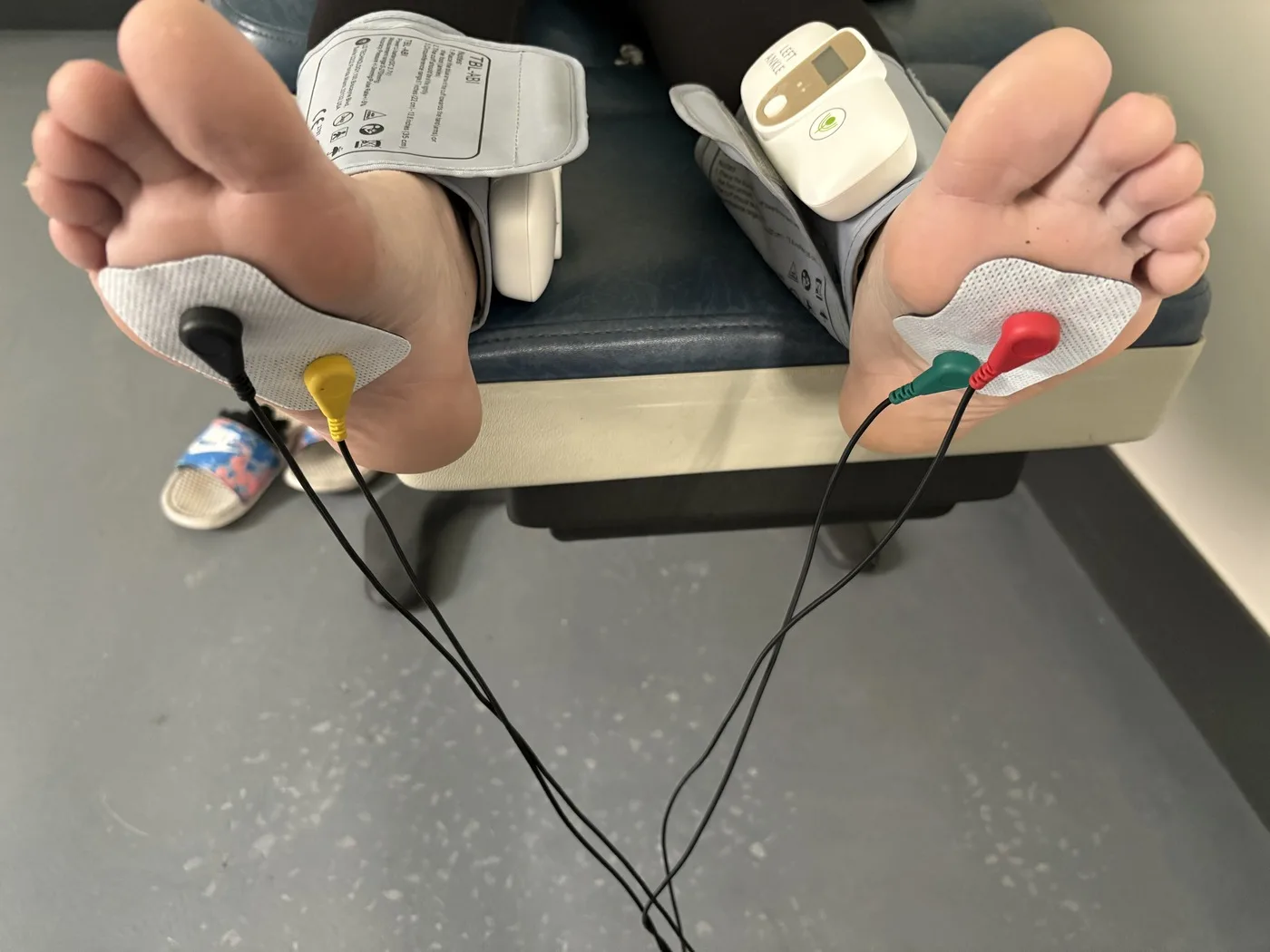
What is peripheral neuropathy and what causes it?
Damage to the small nerves, usually starting in the longest ones — so feet first, then hands.
Diabetes and prediabetes are the most common causes in this region. But B12 deficiency, thyroid disease, alcohol, chemotherapy and several medications all cause it too.
What are the symptoms of peripheral neuropathy?
- Burning, tingling or numbness starting in the toes and moving up.
- Worse at night and in bed.
- A feeling of walking on gravel, or of wearing socks that are not there.
- Loss of balance in the dark.
How is peripheral neuropathy treated?
- EMG and nerve conduction study to confirm it and show what kind it is.
- Bloodwork for the reversible causes — this is often skipped elsewhere. It is where treatable disease is found.
- Metabolic treatment where glucose is the driver, because nothing else works as well if that is left running.
- Medication aimed at nerve pain itself. Ordinary painkillers do very little here.
To be assessed, call us or request an appointment. If this began with a crash or a fall, see accident and injury care.
Which causes of neuropathy are most often missed?
The reversible causes are the ones worth finding, and they are routinely not looked for. B12 deficiency, thyroid disease, and early glucose dysregulation (blood sugar control starting to slip) all cause a small-fiber neuropathy. It improves when the cause is treated — and all three are missed if testing stops at a fasting glucose.
Prediabetes is the biggest single miss. Small nerve fibers are damaged at glucose levels well below the diabetic cutoff. So a patient with burning feet and a normal HbA1c is often told nothing metabolic is going on. Meanwhile, blood sugar spikes after meals are doing steady damage.
What is the outlook for peripheral neuropathy?
Small-fiber damage caught early can improve, sometimes by a great deal, when glucose is truly steadied or a deficiency is corrected. Large-fiber loss that has been there a long time does not reverse.
That gap is the case for testing sooner. Once neuropathy is set in, the real goal shifts from recovery to stopping further loss and managing the pain. That can be done. But it is a different talk from the one you could have had two years earlier.
When this becomes urgent
Weakness that worsens fast, especially if it climbs from the feet upward over days, needs emergency assessment. Any foot ulcer, unexplained redness or swelling in a numb foot needs same-day review, because the protective feeling is gone and injury goes unnoticed.
Related: medications for diabetic nerve pain and their limits, and why heel pain on the first step is more often plantar fasciitis than nerve damage.
Common questions
Can neuropathy be reversed?
Some can. Where the cause is B12 deficiency or early glucose dysregulation, treating the cause can truly improve nerve function. Long-standing damage is harder.
Small Fiber Neuropathy goes through it in detail.
I am not diabetic. Why do I have this?
Prediabetes damages small nerves before blood sugar reaches the diabetic range. It often goes untested.
There is more on this in Burning Feet at Night.
Why does neuropathy start in the feet?
The damage usually starts in the longest nerves in the body. Those run to the feet. That is why it starts in the toes and moves up, and why the hands come later. People describe burning, tingling or numbness. Some feel like they are walking on gravel or wearing socks that are not there. Others lose their balance in the dark.
What tests diagnose peripheral neuropathy?
An EMG and nerve conduction study confirms the neuropathy and shows what kind it is. Bloodwork then looks for the causes that can be reversed. These include B12 deficiency, thyroid disease and early blood sugar problems. A fasting glucose alone is not enough, because sugar spikes after meals can damage small nerves while fasting numbers and HbA1c still look normal.
Do regular painkillers help neuropathy pain?
Very little. Ordinary painkillers are not built for nerve pain. So we use medication aimed at nerve pain itself. Where blood sugar is driving the damage, metabolic treatment comes first, because nothing else works as well if high glucose is left running. Finding and treating the cause is where real gains come from.
When is neuropathy an emergency?
Weakness that gets rapidly worse, especially weakness climbing from the feet upward over a few days, needs emergency care. A foot ulcer, or unexplained redness or swelling in a numb foot, needs to be seen the same day. When the foot has lost its protective feeling, an injury can go unnoticed until it becomes serious.
Numb feet take away one of the three systems that hold you steady. Balance and fall-risk assessment measures the other two, because how much reserve you have left is what actually predicts a fall.
Sources
- Vazquez Do Campo R. Electrodiagnostic Assessment of Polyneuropathy. Neurologic clinics, 2021. PubMed 34602212
- Kool D et al. Small fiber neuropathy. International review of neurobiology, 2024. PubMed 39580213
- Elafros MA et al. Towards prevention of diabetic peripheral neuropathy: clinical presentation, pathogenesis, and new treatments. The Lancet. Neurology, 2022. PubMed 36115364
- Finnerup NB et al. Pharmacotherapy for neuropathic pain in adults: a systematic review and meta-analysis. The Lancet. Neurology, 2015. PubMed 25575710
Hurt in an accident? Start here.
You do not need a lawyer, a police report or a referral to be seen. Bring your symptoms and we will work out the rest.
Monday–Friday, 8:00 a.m. – 4:00 p.m. Same-day appointments are often available for new accident and injury patients.