
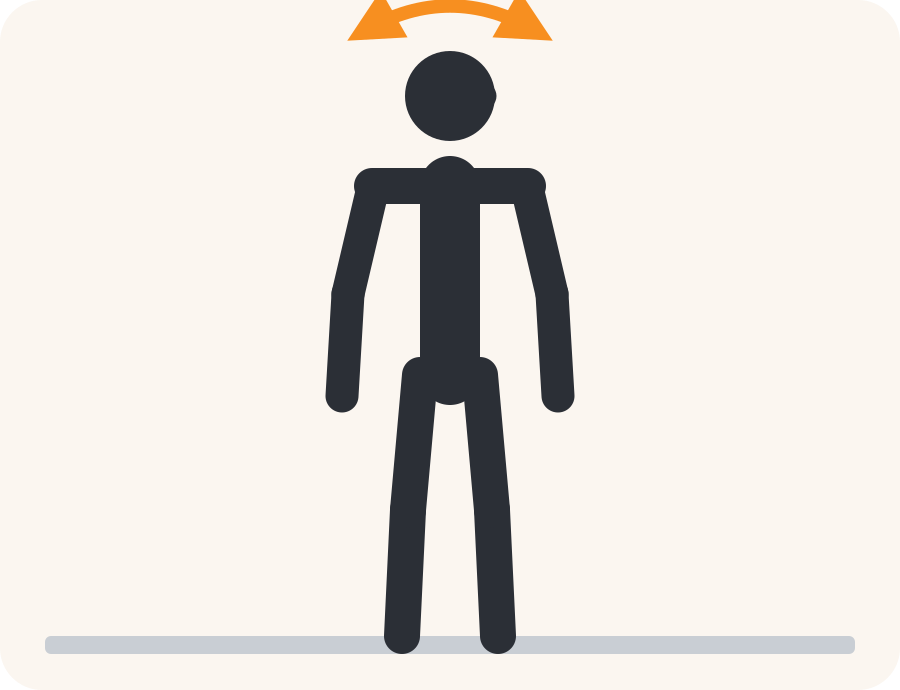
The neck turn is a range-of-motion exercise for a stiff neck after a crash: sit tall, slowly rotate your head toward each shoulder in turn, pause 3 seconds, and do 10 turns each way.
Not every exercise is for every patient. The ones meant for you carry a check mark on the home sheet your physician fills out; stick to those, morning and evening, every day, unless the sheet gives you a different schedule.
What are the steps for the neck turn?
- Get set: Sit up tall and let your shoulders drop and relax.
- Move: Slowly rotate your head toward one shoulder, stopping where it still feels okay. Come back to center, then go the other way.
- How many: Pause 3 seconds at each side. Do 10 turns to each side.
How does the neck turn help you recover?
A neck that is not moved while it heals tends to lock up. Gentle turning keeps the joints and muscles gliding. It also protects something you need every day on Missouri roads: the ability to look over your shoulder before you change lanes.
If turning your head also makes you dizzy or blurs your vision, tell your physician before you keep going. That can point to an inner ear or nerve problem that a VNG balance test looks at.
Which mistakes should you watch for?
- Snapping the head around, or bouncing once you reach the end.
- Letting your shoulders twist with your head. Only the head turns.
- Turning into sharp pain. Stop where the first strain shows up.
When should you stop and call us?
Feeling a stretch, a bit of ache, or next-day stiffness is expected and fine. Stop the exercise and call us if you notice any of these:
- Sharp or stabbing pain
- Pain that jumps 2 or more points above your usual and lasts over an hour
- New numbness, tingling or weakness
- Dizziness or a change in your vision
Call 911 right away for chest pain, fainting or trouble breathing.
Why does your exercise log matter?
Each time you finish your exercises, tick the box on your log, and jot your pain number down once a day. The log rides along to every visit. Your technician adds up your days, has you demonstrate one exercise so form can be checked, and enters that tally in the visit note, right beside the treatments.
What to remember
- Turn the head, not the shoulders.
- Stop at the first strain, not at pain.
- Three-second pause on each side.
Show us you have it: Turn both ways while we watch, so we can gauge your range and make sure your shoulders stay put. If any part is unclear, ask us to go over it again; there is no limit on that.
Other neck exercises in the program
This page belongs to the Gateway Midwest physician-directed physiotherapy program. On Natural Bridge Road, the physician who examined you signs each order, and no treatment runs without a physician on site.
Hurt in an accident? Start here.
You do not need a lawyer, a police report or a referral to be seen. Bring your symptoms and we will work out the rest.
Monday–Friday, 8:00 a.m. – 4:00 p.m. Same-day appointments are often available for new accident and injury patients.